Category Archives: Historic Houses

Stanwood’s Namesake

Womens History Month is the same month as the birthday of Stanwood’s Namesake, Clara Stanwood, March 18th.

Clara Stanwood Pearson, Namesake for the town of Stanwood,Washington.

Clara J. Stanwood Pearson was born in Lowell, Massachusetts March 18th, 1849.  In 1868 the came to the Puget Sound by way of the Isthmus of Panama, when she was 19 years of age. She joined the Pearson Family in Coupeville and on the June 3rd, 1868 she was married D. O. Pearson. In 1877 the young couple and their children moved to Stanwood then known as Centerville.  He established a mercantile and had a wharf built on the shallow mouth of the Stillaguamish River.  After living on the waterfront for sixteen years they moved north to their home on Market Street, now the Pearson House Museum.

Her children attended a small school on the waterfront but in 1892 she lobbied for a new school among other social needs.   To learn more, click the photograph below and read more.

Historic Homes Tour – Thank You

Thank you to all of those who participated in our Historic Homes Tour! It was a very successful event honoring the preservation of our older homes as they were originally designed.

Thank you to our sponsors

Windermere Real Estate
SAAL Brewery
Sollid Real Estate


Thanks also to Chicago Title & Escrow for their “in kind” support and research done by Quinn Marrs under the direction of Don Graham.

And to Camano Commons


Historic Sites Tour 2022

www.historicsitestour.org
CARS AND QUILTS
AUGUST 26 & 27
New this year is the “In person tour”, antique cars and quilts will be at multiple locations to help tell the stories.

Thanks to Humanities Washington for an Opportunity Grant to support this event and Camano Island Chamber of Commerce, SAAL Brewing Coastal Community Bank and the many donations dropped off in our previous tours!
The Stanwood Area Historical Society is planning a program featuring Richard Hanks “The Men Who Built the Floyd: Stanwood’s Historic Public Hall“.
All the buildings will be open
12 noon -4 pm Friday, August 26th,
10am to 4pm on Saturday, August 27th.

D. O. Pearson’s gardens

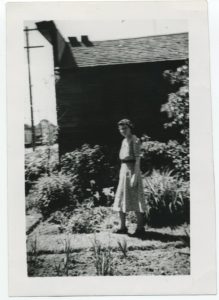
Flaval Pearson, daughter of Fred Pearson, granddaughter of D. O. Pearson in their garden north of the FNCC.   2004.79.01

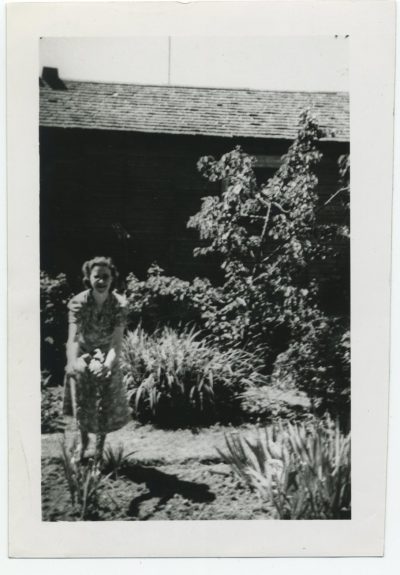
Our recent clearance of the lot on 102nd Ave just north of the Floyd Norgaard Cultural Center has opened up a large city lot that apparently had been empty until 1971 when the house was built.   Just by chance we happened to discover these two photographs in our collection and some notes that show this garden on lot in the 1920s – 40s.

Apparently D. O. Pearson and perhaps his son Fred, used this lot as a garden.  Here are two photograph of his Fred’s daughers, Claire and Flaval in the garden.

The snapshots were donated by Claire Payne in one of her visits to the Pearson House from her home in Spokane.  The lower photograph is her sister Flaval who became the Anacortes librarian in 1939.

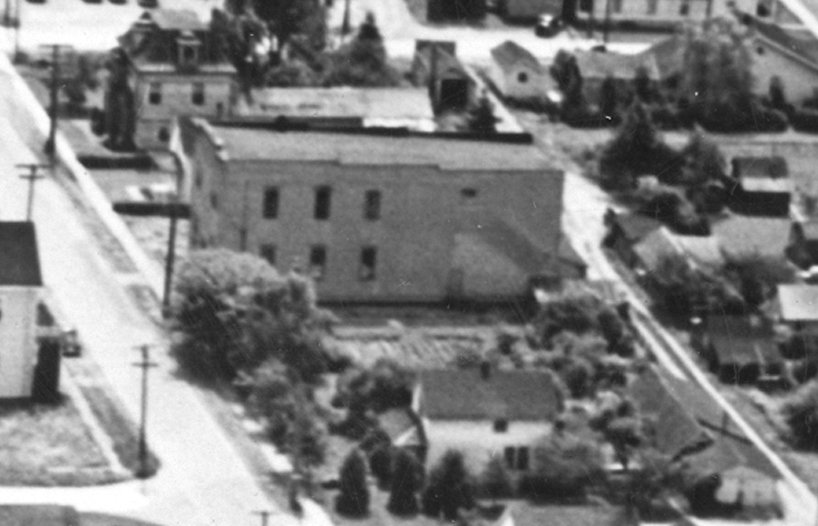
1948 cropped aerial photograph of the gardens north of the FNCC (former I.O.O.F. Hall ) Photographer: J. Boyd Ellis.   By 1948 the roofline of the FNCC is no longer peaked.  The house in the top right photograph was moved one lot north of the gardens in 1976.

“Crow Island”

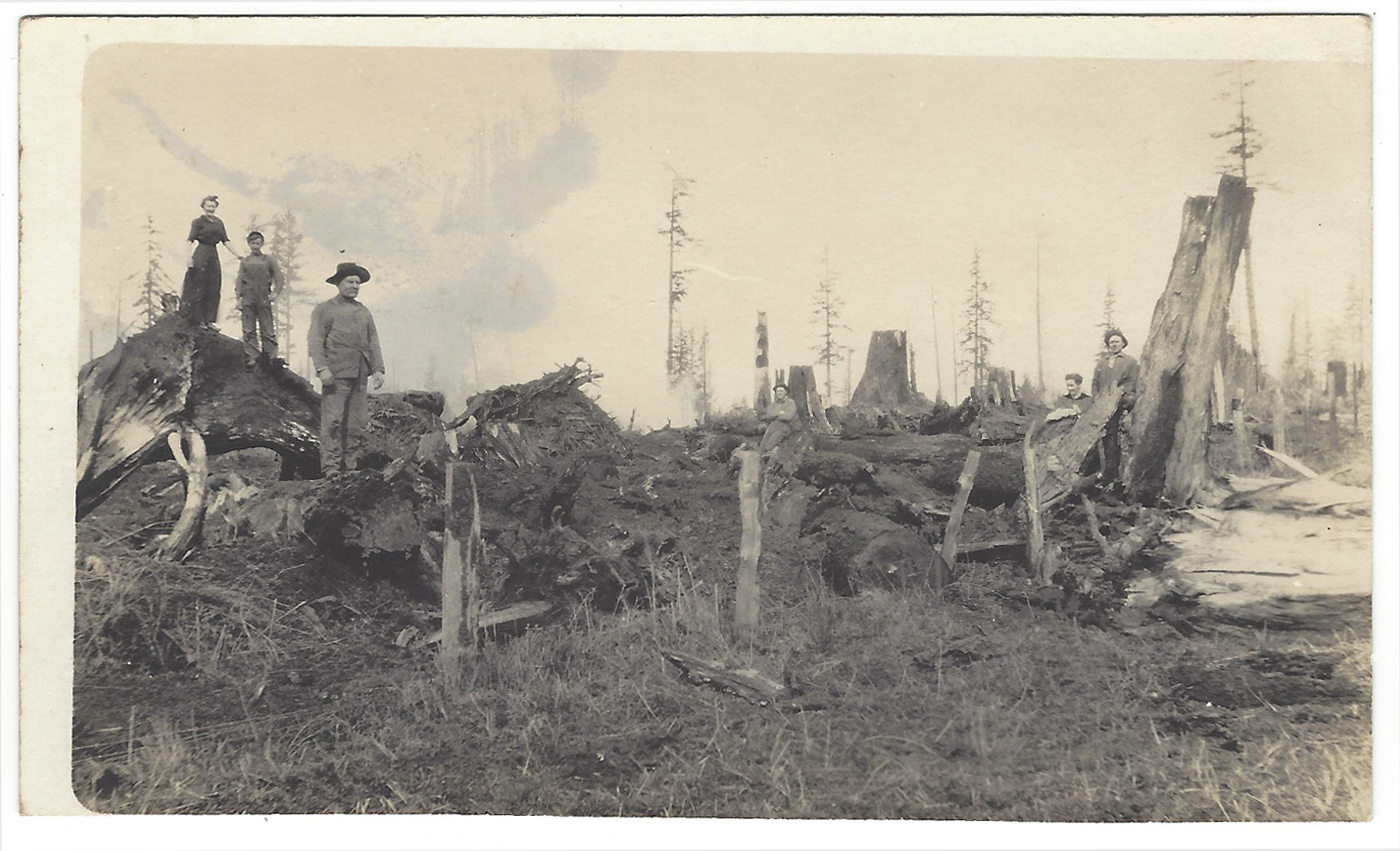
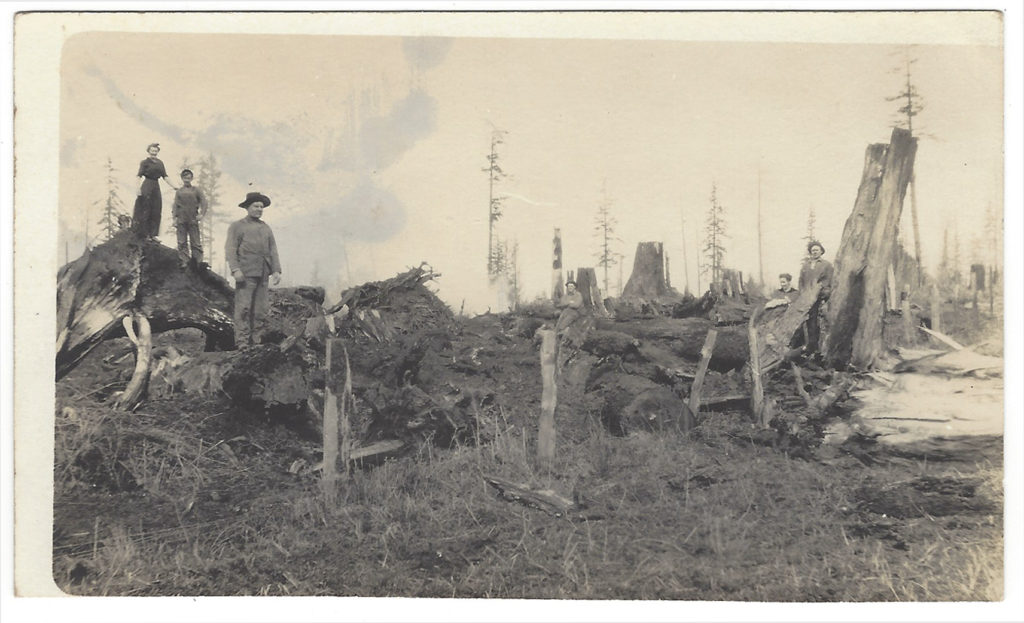
A “crows nest” of stumps. An unidentified photographic postcard image in our collect that seemed typical of the stumps of the island described in early histories that had to be cleared for farm fields.

When I first started learning about local history here some of the elders of our group often mentioned how Camano Island used to be called “Crow Island.”  It wasn’t that I didn’t believe them, we certainly had our share of treetop raucousness in our woods on the South end of Camano Island.  But I recently found an news article from a June 4, 1920 Stanwood Tidings that mentioned “Crow Island”.  The author was Mr. Gilbert Quale, a Norwegian immigrant whose name is also often spelled Qvale.  His farm was at the intersection of SR 532 and Juniper Beach Road where his historic house still stands
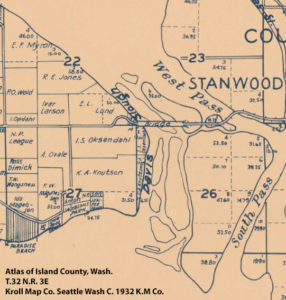
This map (on display at the Eldridge Center Museum – SAHS) shows the property owners of Island County including Mr Quale’s large farm. On the right is Leque Island and the mouth of the Stillaguamish River (West Pass and South Pass).

In the article he described the land clearing efforts of the local farmers: G. W. Hills, Mr. Danielson, Mr Borrison, Jorgen Anderson, Ivar Opdall, Ivan Larson , Peter Wold, Eli Myron.

They blasted the stumps, hauled them to into piles with steam donkeys and plowed the roots out of the ground to clear land for their farms.

After all of his hard work I think he was feeling a bit righteous about his land in the face of some condescension on the part of other farmers on the mainland.  His quote from the article: “Now some of you town people that make fun of “Crow Island,” as you call it, and some of you that are asleep and imagine you are dreaming about stills and moonshine when perhaps pulling crow teeth and blasting stumps, show not be so quick to throw slurs at a neighborhood just because there are a few crows on the Island?
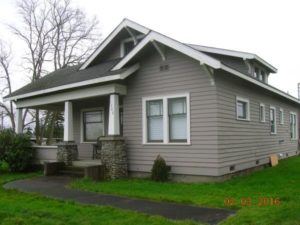
Mr Qvale built this house in about 1923 according to County records. It is one of best preserved historic house and is eligible for the National Historic Register according to a 2006 survey of historic places on the island. It resembles a design of a Sears, Roebuck and Company house.

Gilbert was a community minded soul, he worked to actively promote their of their farm products as one of the original trustees of the Snohomish County Dairyman’s Association in 1917. He was listed as a grocer when he married his wife Amelia Land in 1900 Census and a director of the local Farmer’s Mutual Insurance Co.  He was listed as a dairy farmer at his death in 1943.
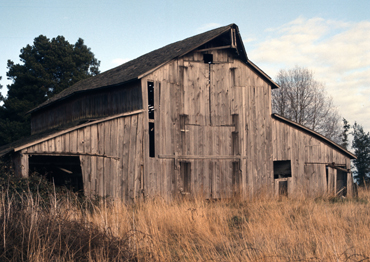
Quale Barn on Camano Island (no longer standing)
Photograph by Gerald Magelssen