Saturday, September 12, 2026
10 a.m. – 3 p.m.
$30.00 per person, Click the image below to purchase tickets.


Saturday, September 12, 2026
10 a.m. – 3 p.m.
$30.00 per person, Click the image below to purchase tickets.
Thanks to all the participants of the parade, the spectators, volunteers and the Stanwood Commerce Alliance for putting on the 47th Parade & “Old Fashioned Ice Cream Social”

Local businesses, cool cars, children, adults, firemen, veterans, were on hand to recognize the United States 250th Anniversary of the Declaration of Independence.
Prizes were awarded for the 1st, 2nd and 3rd prizes and this year we also presented an award for the best costume depicting United States Semiquincentennial, the 250th anniversary of the United States Declaration of Independence!
Sponsored by the Stanwood Area Historical Society and The Stanwood Commerce Alliance.


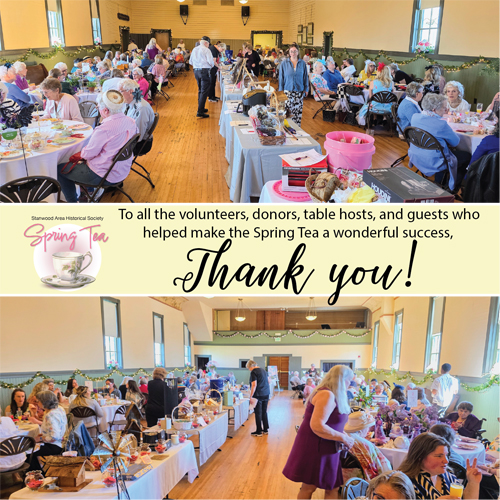
Thank you to all who joined us to celebrate spring with our Tea Social.
It was a fun event this year after a great tradition that began in 2012 to celebrate the opening of the long running Waistlines & Hemlines Exhibit. That exhibit has been updated over the years and we hope to again the FNCC Third Floor with new displays and new histories in the coming year. Volunteers who like to work with antiques of all types, have carpentry skills, display ideas and skills, writing and keyboarding skills are welcome! Contact Us

Womens History Month is the same month as the birthday of Stanwood’s Namesake, Clara Stanwood, March 18th.
Clara Stanwood Pearson, Namesake for the town of Stanwood,Washington.
Clara J. Stanwood Pearson was born in Lowell, Massachusetts March 18th, 1849. In 1868 the came to the Puget Sound by way of the Isthmus of Panama, when she was 19 years of age. She joined the Pearson Family in Coupeville and on the June 3rd, 1868 she was married D. O. Pearson. In 1877 the young couple and their children moved to Stanwood then known as Centerville. He established a mercantile and had a wharf built on the shallow mouth of the Stillaguamish River. After living on the waterfront for sixteen years they moved north to their home on Market Street, now the Pearson House Museum.
Her children attended a small school on the waterfront but in 1892 she lobbied for a new school among other social needs. To learn more, click the photograph below and read more.

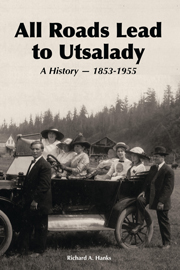
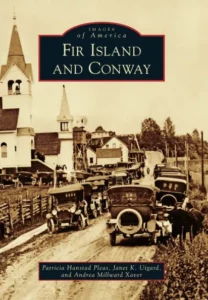
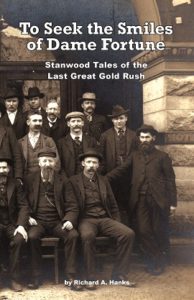
Learn more about the history of Stanwood Main Street and other mysteries in our new books
Main Street (270th Ave NW) is the last of two brick roads constructed in the late 1910s and 1920s in Stanwood. Many changes are in planning stages but hopes are high that they will be preserved. Many little shops are tucked away in both Stanwood’s historic west end and the depot district (East Stanwood)
Copies available at SAHS ~ Scroll down…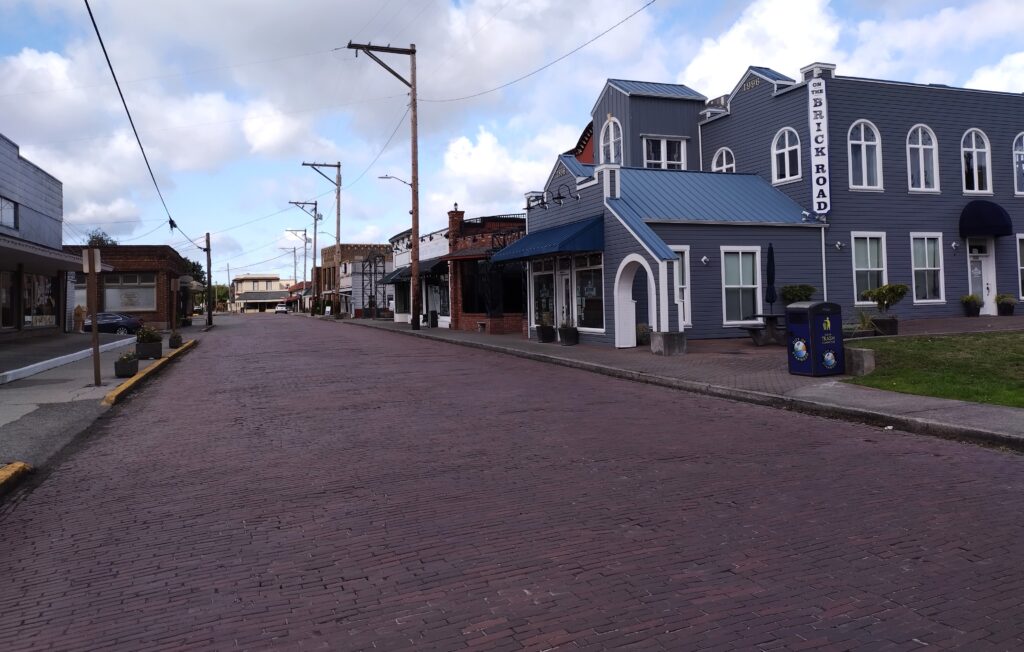
Contact us for copies, see SAHS Hours for picking them up.
[See also Coyote Hill Press which includes A Scrapbook of Stories – a History of the Utsalady Ladies Aid]


Join us for the return of the South End String Band for some traditional fiddle music aka “Camano Roots Music” – songs derived from the ballads and dancing tunes of the old world and the South End nettle clearcuts.
Floyd Norgaard Cultural Center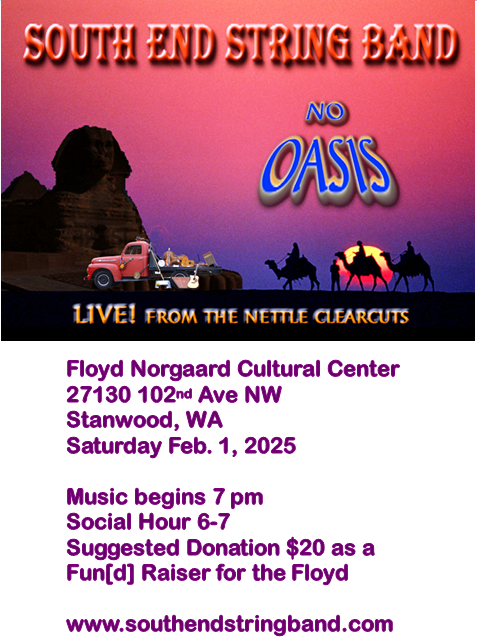
27130 102nd Ave NW
Stanwood, WA
Saturday Feb. 1, 2025
Music begins 7 pm
Social Hour 6-7
Suggested Donation $20 as a
Fun[d] Raiser for the Floyd
Many thanks to Jim Karr, Erich Schweiger, Jim Knighton and Jack Archibald for bringing their bog banjo, homemade fiddle and handmade mandolin and special backwoods bass for your listening and dancing enjoyment. Your attendance helps support other music, art and historical events and programs for the Stanwood Area Historical Society.